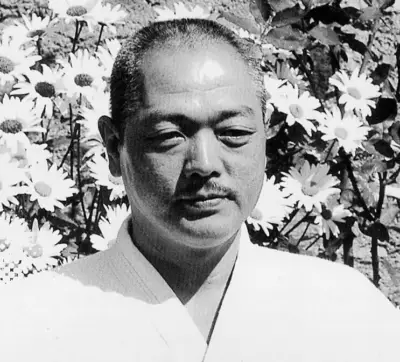
Inauguration of the Banshō Chōwa Aikidojo in Kumatori: Cognard Hanshi’s speech at the dojo
Inauguration of the Banshō Chōwa Aikidojo in Kumatori: Cognard Hanshi’s speech at the dojo
On 21 November 2026, Cognard Hanshi inaugurated the Banshō Chōwa Aikidojo, the new dojo in Kumatori, Osaka Prefecture. The ceremony was attended by Her Excellency Ms Béatrice Le Fraper du Hellen, Ambassador of France to Japan; Mr Romain Otal, Consul General of France in Kyoto; Mr Nishimura, representing Ms Sanae Takaichi, Prime Minister of Japan; Mr Toshiji Fujihara, Mayor of Kumatori; and Mr Kenji Kuratomi and Mr Osamu Ogata, former Consuls and Heads of the Consular Office of Japan in Lyon.
Below is the speech delivered by Cognard Hanshi on this occasion.
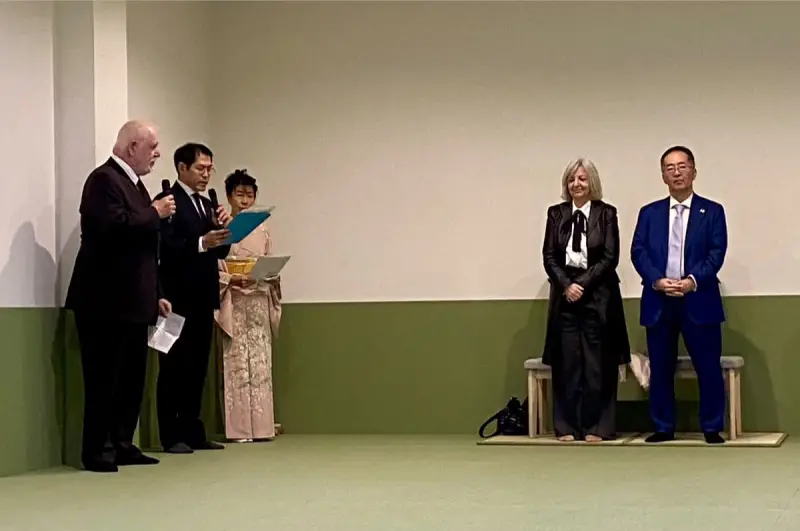
The speech in the dojo during the inauguration ceremony
Your presence here is a great honour to us, and we are deeply moved by it.
I kindly ask you to forgive the modest nature of this place. This is the foundation stone of an undertaking that we intend to develop and which, we hope, will eventually find its place in the history of Japanese budo.
The originality of the process through which it has come into being sends a powerful message. It marks a new stage in the way the history and legends of Japanese warriors may nourish the imagination of a Western world in search of a universal sense of identity.
Interculturality is the key to developing harmony and peace throughout the world.
What different peoples can accomplish together far surpasses anything they could achieve separately.
Violence takes root in the fractures of identity. It serves to preserve the unity of something that is a priori divided.
Violence between individuals and between peoples is nature’s response when any sense of identity is threatened with division.
It is up to human beings to establish unity within themselves, so as not to give in to the temptation of violence. This is precisely what Kobayashi Sensei’s aikido makes possible.
Two cultures as seemingly different as those of Japan and France can enrich one another without becoming diluted or losing their essential character.
What they have in common is that they are both sources from which peoples draw the substance of their identities, a substance so essential to the equilibrium that leads to inner peace.
It is only when the question of identity is set aside that issues of tolerance and solidarity can be resolved, and empathy can truly develop.
Kobayashi Sensei was a genius in the field of psychomotor intelligence.
His proprioceptive abilities were so extraordinary that they drove him to take the aikido he had inherited from another genius, Ueshiba Morihei, and develop it further.
However, the circumstances prevailing in Japan at the time left him with far too little freedom to pursue this evolution openly.
And so he taught in France what he was not yet able to teach in Japan.
I was fortunate enough to be one of the beneficiaries of his teaching. He explicitly entrusted me with the task of returning to Japan to further develop his aikido, to bring back to Japan what, ultimately, belongs to Japan.
That is why we are gathered here today.
For one country to become the fertile ground in which another can further develop its own culture represents a significant step forward in relations between peoples. It points us towards an authentic path to peace.
The aikido now taught here is authentic Japanese budo that has undergone the experience of encountering otherness.
Through this encounter with the other, it has moved beyond the outdated thinking that so often characterises traditions.
It has discovered the universal dimension advocated by its founder, Ueshiba Morihei.
The contributions made by Kobayashi Sensei, which matured through his experience in Europe, are decisive in securing the future of our art.
The peaceful message conveyed by O-Sensei Ueshiba could have led to seemingly insurmountable contradictions and impasses.
The oxymoron « non-violent martial art » may have been intelligible to minds inclined towards dialectical reasoning, but translating that concept into actual technical practice was far from self-evident.
Indeed, aikido techniques are rooted in traditional martial arts that were inherently violent. A fundamental gap therefore remained between the philosophical aspiration and the physical movement itself, which continued to apply a strategy based on the principle of domination and submission.
The evolution towards complex techniques incorporating an ethical dimension, as proposed by Kobayashi Sensei, bridged this gap.
In the movements of Kobayashi aikido, the other person is no longer an adversary, because the aikidoka no longer seeks to define their own identity through the martial relationship.
The technique itself demonstrates a fundamental truth: the enemy is not the person standing before me, but rather that which sets us against one another.
The enemy is not the person standing before me, but rather that which sets us against one another.
The message of peace that we wish to convey through this dojo draws its strength from the power of traditional budo and from the immeasurable potential of intercultural exchange.
It is of crucial importance if we are to halt the decline of budo in Japan.
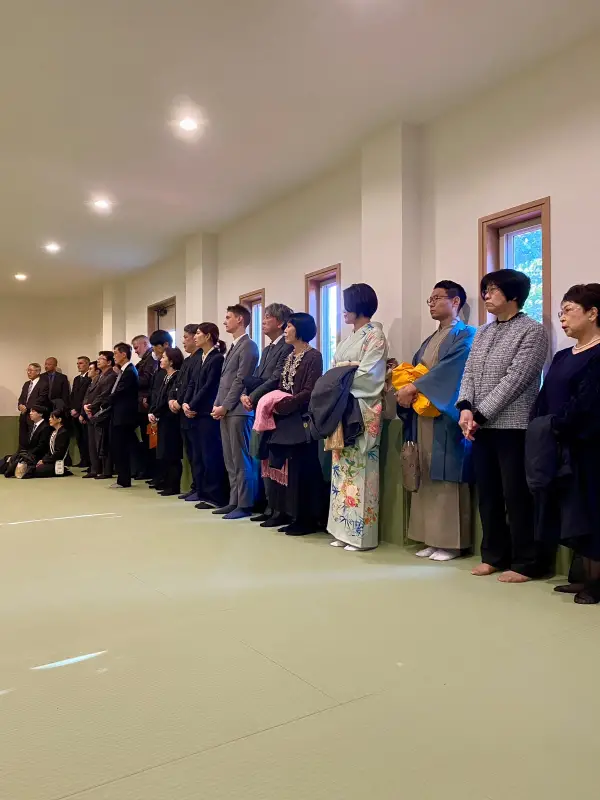
Guests and practitioners during the inauguration ceremony
I have chosen to give this dojo the name Banshō Chōwa Aikidojo — « The Aikido Dojo of Harmony in All Things ».
This is neither an expression of a mystical crisis nor the product of metaphysical delusion.
It is the affirmation of a concept that the authentic practice of aikido has enabled me to experience:
« Harmony is effective. »
This means, quite simply, that harmony is more effective than violence.
This is no utopia.
It is an idea from which we have developed and tested a model of peaceful human relationships, a model that is not intended to remain confined within the walls of a dojo.
This concept must take root in our consciousness and replace the imperatives to resort to violence that constantly come to us from our genetic memory and our collective memory.
It must enable us to create, conduct business, manage organisations and govern without violence.
For those who choose to embrace it, this concept will also provide a foundation for developing new geopolitical strategies, opening the way towards a world liberated from violence.
Cognard Hanshi – Kumatori, 21 November 2026
🌐 Version française : lire ce discours sur aikido.fr
Follow Kobayashi Ryu Aikido news
Find us on social media: